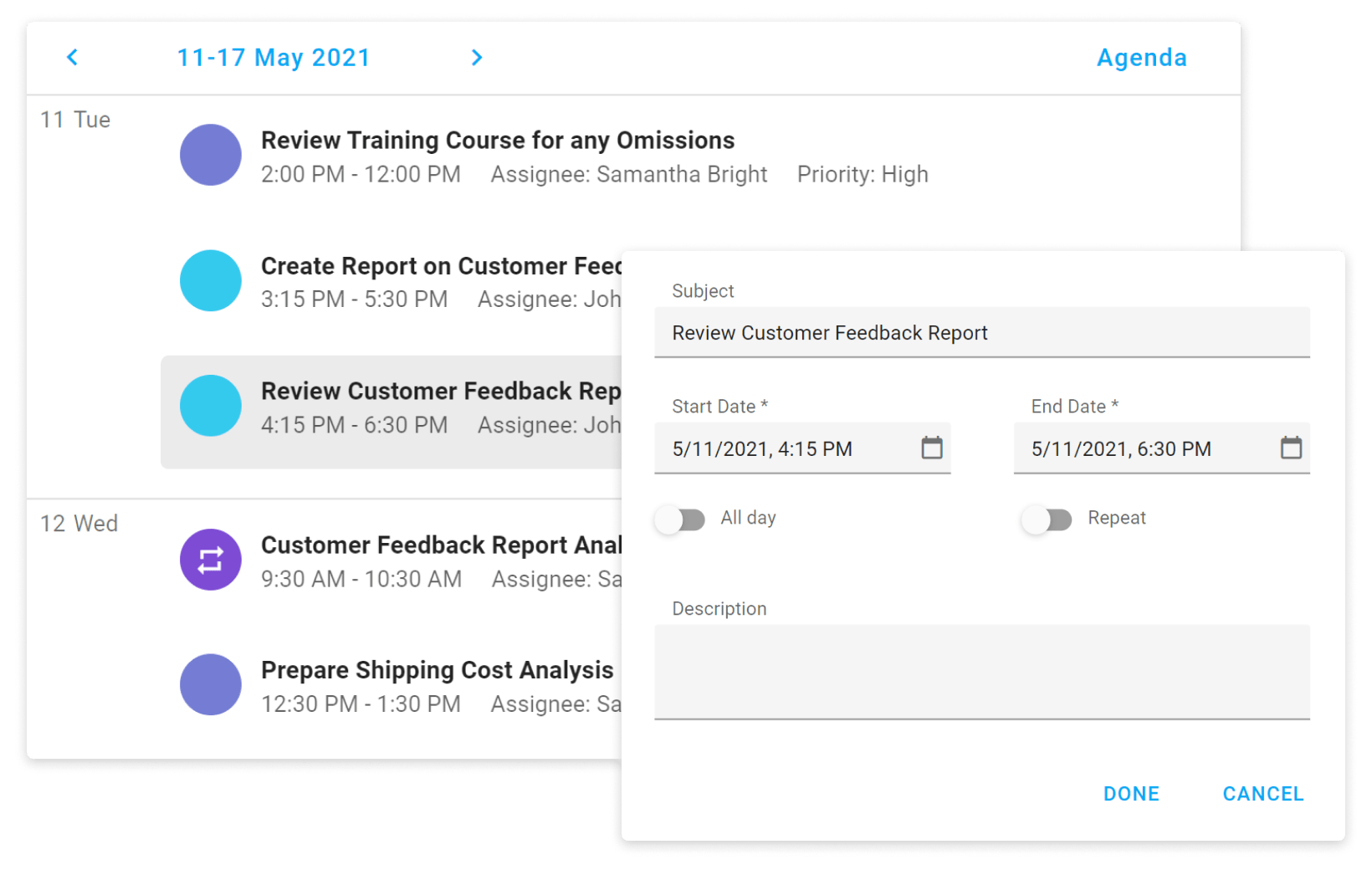

In the realm of modern web development, creating interactive and visually appealing calendars is a common requirement. One powerful tool that stands out for this purpose is the ReactSchedulerCalendar. This component allows developers to integrate a fully functional calendar into their React applications with ease. In this post, we will explore the ReactSchedulerCalendar example, delving into its features, setup, and customization options.
Understanding ReactSchedulerCalendar
The ReactSchedulerCalendar is a versatile component designed to handle scheduling and calendar functionalities within React applications. It provides a range of features that make it suitable for various use cases, from simple event displays to complex scheduling systems. Some of the key features include:
- Drag-and-drop functionality for events
- Customizable views (day, week, month)
- Integration with external data sources
- Support for recurring events
- Responsive design for mobile and desktop
Setting Up ReactSchedulerCalendar
To get started with the ReactSchedulerCalendar, you need to follow a few steps to set up your development environment and integrate the component into your React application.
Installation
First, ensure you have a React project set up. If not, you can create one using Create React App:
npx create-react-app my-calendar-app
cd my-calendar-app
Next, install the ReactSchedulerCalendar package:
npm install react-scheduler-calendar
Basic Integration
Once the package is installed, you can integrate the ReactSchedulerCalendar into your application. Here is a basic example to get you started:
import React from ‘react’; import ReactSchedulerCalendar from ‘react-scheduler-calendar’;const events = [ { id: 1, title: ‘Meeting with Team’, start: new Date(2023, 9, 1, 10, 0), end: new Date(2023, 9, 1, 11, 0), }, { id: 2, title: ‘Lunch Break’, start: new Date(2023, 9, 1, 12, 0), end: new Date(2023, 9, 1, 13, 0), }, ];
function App() { return (
); }
export default App;
Customizing ReactSchedulerCalendar
The ReactSchedulerCalendar offers extensive customization options to tailor the calendar to your specific needs. Let’s explore some of the key customization features.
Views
You can customize the views to display the calendar in different formats such as day, week, or month. Here’s how you can set up multiple views:
import React from ‘react’; import ReactSchedulerCalendar from ‘react-scheduler-calendar’;const events = [ // Your events here ];
function App() { return (
); }
export default App;
Styling
Customizing the appearance of the calendar is straightforward with CSS. You can apply your own styles to the calendar component. Here’s an example of how to add custom styles:
import React from ‘react’; import ReactSchedulerCalendar from ‘react-scheduler-calendar’; import ‘./App.css’;const events = [ // Your events here ];
function App() { return (
); }
export default App;
In your CSS file (e.g., App.css), you can define your custom styles:
.custom-calendar {
  background-color: #f0f0f0;
  border: 1px solid #ccc;
  padding: 10px;
}

.custom-calendar .event {
  background-color: #007bff;
  color: white;
  border-radius: 5px;
  padding: 5px;
}
Handling Events
You can handle events such as clicking on an event or dragging and dropping events. Here’s an example of how to handle event clicks:
import React from ‘react’; import ReactSchedulerCalendar from ‘react-scheduler-calendar’;const events = [ // Your events here ];
function App() { const handleEventClick = (event) => { alert(
Clicked on ${event.title}); };return (
); }
export default App;
Advanced Features
The ReactSchedulerCalendar offers several advanced features that can enhance the functionality of your calendar. Let’s explore some of these features.
Recurring Events
Handling recurring events is a common requirement for many calendar applications. The ReactSchedulerCalendar supports recurring events, allowing you to define events that repeat at regular intervals. Here’s an example of how to set up recurring events:
import React from ‘react’; import ReactSchedulerCalendar from ‘react-scheduler-calendar’;const events = [ { id: 1, title: ‘Weekly Meeting’, start: new Date(2023, 9, 1, 10, 0), end: new Date(2023, 9, 1, 11, 0), recurrenceRule: ‘FREQ=WEEKLY;BYDAY=MO’, }, ];
function App() { return (
); }
export default App;
Integration with External Data Sources
You can integrate the ReactSchedulerCalendar with external data sources such as APIs or databases. This allows you to fetch and display events dynamically. Here’s an example of how to integrate with an external API:
import React, { useEffect, useState } from ‘react’; import ReactSchedulerCalendar from ‘react-scheduler-calendar’;function App() { const [events, setEvents] = useState([]);
useEffect(() => { fetch(’https://api.example.com/events’) .then(response => response.json()) .then(data => setEvents(data)); }, []);
return (
); }
export default App;
Best Practices for Using ReactSchedulerCalendar
To make the most out of the ReactSchedulerCalendar, follow these best practices:
- Optimize Performance: Ensure that your events data is optimized for performance, especially when dealing with a large number of events.
- Responsive Design: Make sure your calendar is responsive and works well on different devices and screen sizes.
- User Experience: Focus on providing a seamless user experience with intuitive interactions and clear visual feedback.
- Customization: Leverage the customization options to tailor the calendar to your specific needs and branding.
💡 Note: Always test your calendar thoroughly to ensure it works as expected across different browsers and devices.
ReactSchedulerCalendar Example
Let’s put everything together with a comprehensive example. This example will include custom views, styling, event handling, and integration with an external data source.
import React, { useEffect, useState } from ‘react’; import ReactSchedulerCalendar from ‘react-scheduler-calendar’; import ‘./App.css’;function App() { const [events, setEvents] = useState([]);
useEffect(() => { fetch(’https://api.example.com/events’) .then(response => response.json()) .then(data => setEvents(data)); }, []);
const handleEventClick = (event) => { alert(
Clicked on ${event.title}); };return (
); }
export default App;
In your CSS file (e.g., App.css), you can define your custom styles:
.custom-calendar {
  background-color: #f0f0f0;
  border: 1px solid #ccc;
  padding: 10px;
}

.custom-calendar .event {
  background-color: #007bff;
  color: white;
  border-radius: 5px;
  padding: 5px;
}
This example demonstrates how to create a fully functional and customized calendar using the ReactSchedulerCalendar. You can further enhance this example by adding more features and customizations as per your requirements.
In conclusion, the ReactSchedulerCalendar is a powerful tool for integrating calendar functionalities into React applications. With its extensive features and customization options, it provides a flexible solution for various scheduling needs. By following the best practices and leveraging the advanced features, you can create a robust and user-friendly calendar that meets your specific requirements. Whether you are building a simple event display or a complex scheduling system, the ReactSchedulerCalendar offers the tools you need to succeed.
Related Terms:
- react bootstrap calendar
- react timeline calendar
- react calendar libraries
- reactjs calendar with events
- react calendar planner
- best react calendar library